


Music Lessons for Kids in Antalya: A Guide for Expat Families

If you are an international family in Antalya looking for music lessons for your child, the short version is this: start with a free trial-style consultation, pick one instrument your child is curious about, book one-to-one lessons at a fixed weekly time, and make sure the teacher can explain things in a language your child understands. This guide walks you through each step, with real data on Antalya's international community and the Turkish school calendar, so you can plan lessons around your family's life rather than the other way round.
Short answer
Who it is for: children of expat, international and mixed-language families living in Antalya, from early primary school age upward.
Best first step: a 15-minute free consultation where the teacher meets your child and suggests an instrument and format.
Language: at Artistik Stüdyo, English-language lessons are available for guitar, singing, cello and drums; our coordinator also speaks Russian.
Format: one-to-one lessons for instruments and singing; group classes for rhythm/darbuka, handpan, painting and children's drums.
Timing: the Turkish school breaks (16–20 Nov 2026, 25 Jan–5 Feb 2027 and 8–12 Mar 2027) are good moments to start or to add extra practice.
Why this question matters more in Antalya than you might think
Antalya is home to one of the largest foreign-resident communities in Turkey. According to figures from the Presidency of Migration Management (Göç İdaresi Başkanlığı, GİB), Antalya ranks second only to Istanbul for foreign residents with a residence permit. The number dropped sharply during 2023, then recovered: by early September 2026 it stood at just over 150,000 people.

Source: GİB figures as reported by DHA/BirGün (19 Jan and 9 Nov 2023), Turizm Gazetesi (31 Dec 2023, table value), Atasa (27 Aug 2026) and Göç Araştırmaları Vakfı (3 Sep 2026). Dates are uneven, so read it as snapshots, not a smooth trend.
Behind that number are many families with school-age children. Most of them face the same practical problems when they look for music lessons: search results are mostly in Turkish, course pages rarely say which teachers speak English, and it is hard to tell from a website whether a place is set up for children or mainly for adults. The rest of this guide tries to answer those questions directly.
Step 1: Decide what you actually want from lessons
Parents often start with a long list of hopes: better concentration, better grades, more confidence, a new friend group, a hobby that is not a screen. It helps to be honest about which of these music lessons can deliver.
The research on the 'music makes children smarter' idea is not encouraging. In 2020, Giovanni Sala and Fernand Gobet re-analysed 54 studies covering 6,984 children and concluded that music training has no meaningful positive effect on children's cognitive skills, such as memory, or on academic achievement. The better-designed studies found no effect at all. Gobet did add that music training may still be beneficial in other ways, for example for social skills or self-esteem, but that too few studies exist to be sure.
So the best reason to sign your child up is simpler: they want to play music. A child who enjoys the instrument will practise; a child who was enrolled to raise their maths grade usually will not. Use the questions below to decide what success looks like for your family:
Does your child want to play songs they already know, or are they curious about one particular instrument?
Is the goal a relaxed weekly hobby, or does your child want to perform, record or later prepare for a music school?
How many weeks or years do you expect to stay in Antalya? A short stay may suit a group workshop; a longer one suits a one-to-one plan.
Will someone at home be able to sit with a younger child for ten minutes of practice a few times a week?
Does your child need lessons fully in English, or are they comfortable with a mix of English and Turkish?
Step 2: Choose an instrument (and do not overthink it)
Children change their minds, and that is normal. A good first instrument is one your child is excited about and that fits the space and noise level of your home. Here is a quick, practical overview of the options taught at Artistik Stüdyo:
Piano and keyboard
Piano gives a clear visual picture of how music works, which is why many families start there. You will need a keyboard or piano at home for practice. See our piano lessons page for details on how the lessons are structured.
Guitar (classical, acoustic, electric, bass)
Guitar is a favourite with children who want to play the songs they hear. Classical guitars with nylon strings are gentler on small fingers; electric guitar appeals to young rock fans. English-language guitar lessons are available. Read more on our guitar lessons page.
Violin and cello
String instruments take patience at the start, because producing a clean sound takes time. In return, children learn careful listening very early. Cello lessons can be given in English. See the violin lessons page or ask about cello during the consultation.
Drums and rhythm
For energetic children, drums are often the instrument that finally keeps them interested. There are both one-to-one drum lessons for children and adults, and group children's drum workshops. Drum lessons can be given in English. Darbuka and rhythm group classes are another fun, social way to start. All instrument pages are listed under instrument courses.
Singing
Many children simply love to sing. Voice lessons build breathing, pitch and confidence, and singing lessons can be given in English. More on our singing and vocal training page.
Turkish and regional instruments
Living in Turkey is a great opportunity to try something your child would not easily find elsewhere: bağlama (saz), kanun, ney or darbuka. These lessons are taught by our Turkish teachers; ask during the consultation how language support can work for your child.
If you also need to buy an instrument, our sister company Ezgican Müzik can help you choose one that suits your child's size and level.
Step 3: Pick the right lesson format
For most children, the format matters as much as the instrument. These are the formats available at Artistik Stüdyo:
One-to-one lessons: all instrument and singing lessons are private. The teacher sets the pace for your child, which is especially useful when a child is still getting used to a new language or a new country.
Sunday group workshop: children on a one-to-one package can join the Sunday 13:30 group workshop on solfège and sight-singing (reading music by singing). It is a relaxed way to meet other young musicians.
Group classes: rhythm and darbuka, handpan, painting and children's drum workshops run as groups. Good for short stays or for children who enjoy learning with others.
Online lessons: if you travel often or live outside Antalya, online VIP lessons let the same teacher continue from a distance.
Outside music, children who prefer drawing or clay can also join our painting workshop or ceramics workshop.
Step 4: Plan lessons around the Turkish school year
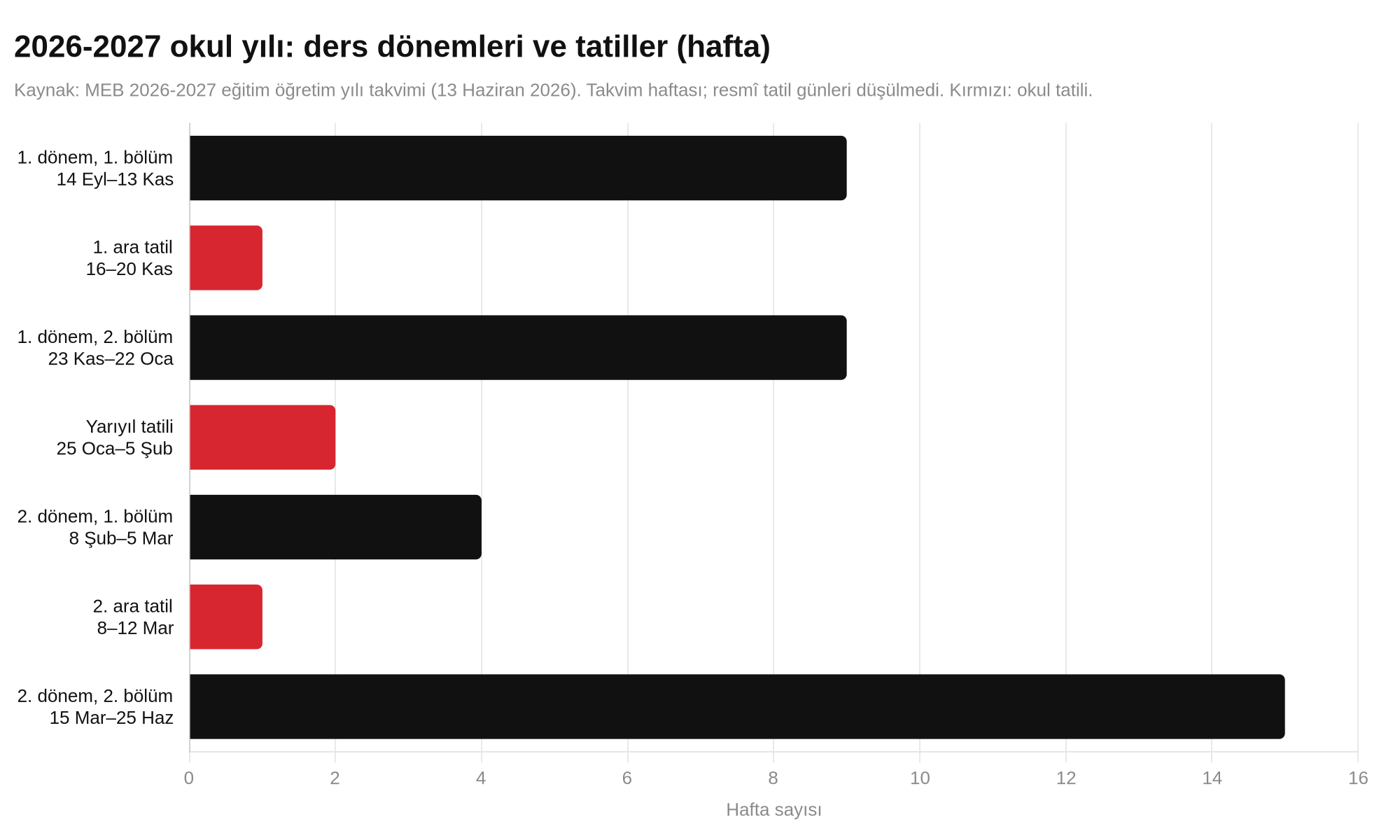
Even if your child attends a private or international school with its own calendar, many activities and families in Antalya follow the state-school calendar set by the Ministry of National Education (MEB). For 2026–2027, school runs from 14 September 2026 to 25 June 2027, with three breaks during the year.

Source: MEB 2026–2027 school calendar, as reported by Habertürk. Weekdays counted by us from the official dates. Private and international schools may use different dates; check your child's school calendar.
A few planning tips based on this calendar:
The November break (16–20 Nov 2026) is a good moment for a first lesson: no homework pressure and a free week to get used to the instrument.
The two-week semester break (25 Jan–5 Feb 2027) suits children who want a short burst of extra lessons or a group workshop.
Keep the weekly lesson at the same day and time during school weeks. Routine matters more than lesson length for young beginners.
If you travel home for the holidays, ask whether lessons can continue online for those weeks.
Step 5: Help your child practise at home
Most of the progress happens between lessons. You do not need to be a musician to help. Simple habits work best:
Short and frequent beats long and rare: ten to fifteen minutes on most days is easier for a young child than one long session.
Keep the instrument visible and ready to play, not packed away in a case.
Ask your child to 'teach you' what they learned this week. Explaining it out loud helps them remember.
Write down questions for the teacher, especially if language makes it hard for your child to explain what went wrong.
Celebrate small milestones: the first full song, the first piece played for grandparents on a video call.
How it works at Artistik Stüdyo
Artistik Stüdyo is an MEB-approved music and art course in Lara, Muratpaşa, Antalya. Lessons, a recording studio and a rehearsal room are all in one three-storey building, and we are open every day from 10:00 to 20:00.
Free 15-minute consultation: you and your child meet the team, talk about goals and try out options. Fees and the lesson plan are set here, because they depend on the subject and the package.
Full-time teachers: our teachers are full-time staff members, so your child keeps the same teacher week after week.
English and Russian support: English-language lessons for guitar, singing, cello and drums (plus recording and arrangement); our coordinator speaks Russian.
One-to-one plus community: private lessons, with the Sunday 13:30 solfège and sight-singing group for one-to-one package students.
A real studio in the building: when your child is ready, they can record a song in our recording studio, a memorable goal for many young players.
We do not currently offer diction or drama lessons. If you are an adult looking for lessons in English yourself, our English guide to music lessons, recording studio and rehearsal room in Antalya covers that. You can also reach us through our contact page.
Frequently asked questions
What age can my child start music lessons in Antalya?
There is no single right age. Readiness depends on attention span, hand size for the chosen instrument and the child's own interest. At Artistik Stüdyo the teacher meets the child in a free 15-minute consultation and suggests an instrument and a starting format, instead of applying one fixed age rule.
Are lessons available in English?
Yes, for some subjects. One of our teachers gives lessons in English for guitar, singing, cello and drums, and also for recording and arrangement. For other instruments, ask during the consultation what language support is possible. Our coordinator also speaks Russian.
Will music lessons make my child better at school?
Do not count on it. A 2020 meta-analysis of 54 studies with 6,984 children by Sala and Gobet found no meaningful effect of music training on memory or academic results. Children learn music well when they enjoy music for its own sake, and that is a good enough reason to start.
Can my child join a group class instead of one-to-one lessons?
Yes. Group classes run for rhythm and darbuka, painting, handpan and children's drum workshops. Instrument and singing lessons are one-to-one, and one-to-one package students can also join the Sunday 13:30 group workshop on solfège and sight-singing.
How much do children's music lessons cost?
Fees depend on the subject, the lesson format and the package, so they are set during the free 15-minute consultation. You can book it on WhatsApp or by phone at 0542 248 69 20.
Is the course officially recognised in Turkey?
Artistik Stüdyo is a music and art course approved by the Turkish Ministry of National Education (MEB). Note that the DJ course is not an MEB-certified programme.
Sources
Göç Araştırmaları Vakfı – Temmuz–Ağustos 2026 Göç Trendleri (GİB data, 3 Sep 2026)
Atasa – Türkiye migration statistics by province (GİB data, 27 Aug 2026)
BirGün / DHA – Göç İdaresi residence permit figures (18 Nov 2023)
Turizm Gazetesi – Residence permit holders by province, 31 Dec 2023 (17 Jan 2024)
Ready to find the right instrument for your child? Book a free 15-minute consultation on WhatsApp or call us.
Last updated: 31 October 2026

Yorumlar